Colombia for solo female travelers: my honest 2-month experience & safety tips

1. Introduction
Colombia had been on my radar for years, a country full of color, music, beaches, mountains, and some of the friendliest people in South America. As a solo female traveler, I was curious, excited, and, like it often happens with countries that are generally considered “unsafe,” also a little nervous about spending two full months exploring it on my own.
Disclaimer: this post may contain affiliate links. If you make a booking through them, I may earn a commission at no extra cost to you.
During my two months in Colombia, I traveled through Medellín, Cartagena, San Andrés, Santa Marta (Minca, Mendihuaca, and Palomino), Rincon del Mar, and Salento, a mix of big cities, Caribbean islands, tiny beach towns, and lush coffee valleys.

In this guide, I’m sharing my honest impressions, safety tips, and everything I learned along the way to help other solo female travelers plan a trip that feels both empowering and safe.
2. Is Colombia safe for solo female travelers? My honest take
Before arriving in Colombia, I heard every possible opinion, from people who absolutely loved it to friends who begged me not to go. As always, the truth is very personal: everyone’s experience is different, and your reality on the road can be very far from someone else’s fears.

That said, Colombia is safe for solo female travelers if you stay aware, choose your neighborhoods carefully, and follow the same precautions you’d take in any other country.
Here’s what I personally noticed:
Tourist destinations are generally friendly and easy to navigate.
Crime is usually opportunistic, mainly pickpocketing or phone theft, especially in big cities (I never experienced or witnessed anything myself, but I did hear some stories).
Locals are incredibly warm and often very protective toward solo women.
Safety varies a lot between neighborhoods, even within the same city.
Choosing the right area to stay is essential, paying a little more for a safer neighborhood is absolutely worth it for your peace of mind.
I personally felt safer in Colombia than in Brazil, but this is based purely on my own experience and can vary from person to person.
Overall, I felt safe, but I was intentional about where I stayed, how I moved around, and the times of day I walked alone.
3. My 2-month solo female travel itinerary in Colombia
Here’s the exact itinerary I followed, including how long I stayed in each destination:
Medellín – 3.5 weeks in total
Cartagena – 3 days
San Andrés – 1 week
Santa Marta / Minca / Mendihuaca / Palomino – 10 days
Rincon del Mar – 1 week
Salento – 5 days

Each destination felt completely different, which is exactly what makes Colombia such an addictive country to travel.
3.1 Medellín: the digital nomad hub
Medellín is one of the most popular destinations for solo travelers and digital nomads, thanks to its modern infrastructure, its nature, vibrant culture, and strong coworking scene.

Why it’s great for solo female travelers
Neighborhoods like El Poblado and Laureles feel safe, walkable, and full of laptop-friendly cafés, restaurants, and coworking spaces.
Uber is reliable, affordable, and widely used.
There’s a huge international and digital nomad community, making it very easy to meet people.
Where I stayed
I stayed in Medellín on three different occasions. Because I loved my first Airbnb (a big coliving appartment with several rooms availble for any kind of budget) and the area so much, I decided to return to the same place every time I came back, it genuinely felt like coming home.

El Poblado is a huge neighborhood, and choosing the right area is key. I wanted to be close to everything but not in the middle of the party area (Provenza), which I personally hated, too noisy for my ears and with a vibe that didn’t suit me at all.

The perfect area for me was Astorga: close to everything, full of great restaurants and nice bars, but still calm and residential. I always felt extremely safe, even walking home at night, and it’s close to Parque El Poblado, where many group tours depart.
Another area I really liked and would absolutely recommend is Manila, slightly more lively, full of cafés and restaurants, but still chilled and perfect for solo female travelers spending some time in Medellín.

My go-to places in El Poblado
Medellín has an incredible food and coffee scene, and I could honestly dedicate an entire post just to this. These are a few places you shouldn’t miss:
Helecho Vegan Sushi: for the best vegan ramen ever.
Urbania Café: if you're looking for a place with great wifi and amazing coffee.
Mamasita Medallo: for great local food and local vibes.
Bread Factory: amazing place for brunch in the middle of the urban nature.
Típico Parce: one of my go-to restaurant for local food close to where I was staying.
Siete Pulgadas Listening Bar: hidden gem for those who like great cocktails.
Arepas Las Chachas: best place if you want to have breakfast with the traditional Colombian arepas.
La Tienda Concervezatorio: my favorite local bar for having a beer and meeting new people during the evening, amazing social vibes and full of locals.
El Altar Taquería: best tacos in Medellin and best vibes, they have several location in El Poblado and Laureles, my go-to one was in Manila.
574 Breakfast: one of my go-to places for breakfast, they serve big portions for a super cheap price.
Yogalab: a boutique studio with great teachers very close to where I was staying, you can book one class only or a pack.

Breakfast with arepa 3 quesos at Las Chachas, El Poblado, Medellin
Tours and experiences I recommend in Medellín
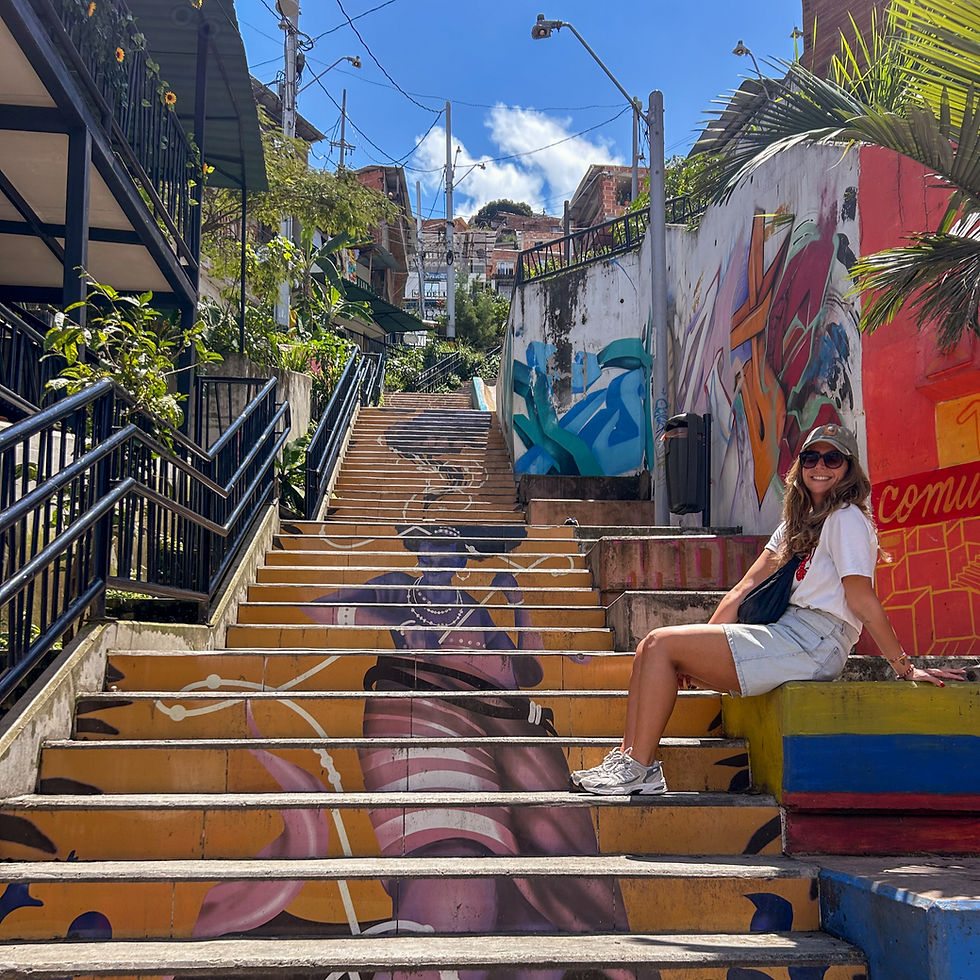
Comuna 13 tour: to learn more about the history of what was considered the most dangerous area of the city.
Guatapé day trip: if you have time to visit the famous Piedra del Peñol and the super cute village full of history and unique street art, this is a convenient option if you don't have time to spend a night in the area.
Downtown walking tour: one of the best tour you can choose to understand the history, development, conflict and social commitment of Medellín.
Museo Casa de la Memoria, museum dedicated to the urban conflict in Medellín is a must-visit for travelers wanting to fully understand the city and the country.
A weekend in nature in Cocorná, staying at Tierra de Agua (reachable by bus from Medellín).

Views from Piedra del Peñol de Guatapé
3.2 Cartagena: colorful, lively & full of energy
Cartagena is undeniably postcard-perfect, with its colorful colonial houses, vibrant street art, charming old-town streets, and laid-back Caribbean vibes, it’s one of the most visually striking cities in Colombia and a must-see for many first-time visitors.
That said, my honest opinion is that 3 days in Cartagena were more than enough for me. While I enjoyed exploring the city, I personally found it very touristy and not entirely aligned with my travel style. Still, by managing my expectations and focusing on what the city does best, I was able to make the most of my time there.
I spent my days wandering through the center, watching the sunset along the city walls, and using Cartagena as a base for my trips, experiences that made my short stay worthwhile despite the crowds.

Safety for solo women
The walled city is very touristy and generally safe, although crowds can attract pickpockets. Nightlife is vibrant, but basic awareness is essential.

Where to stay
Getsemaní: backpacker vibes and great energy. This is where I stayed, and I absolutely recommend it. I stayed at Casa Belia, which offered great value for money, a super convenient and safe location, and a very friendly host.

Chilled moments at Casa Belia, Getsemani, Cartagena Centro Histórico: perfect for charm and convenience.
Crespo: ideal if you want to stay close to the airport in one of the safest residential areas of the city. I stayed at Aquí Me Quedo, and it felt like home from the very first minute. I even went back weeks later with a friend before catching a last-minute flight to Salento.
Highlights
A walking tour of Getsemaní and the city center is a must, I booked mine through GetYourGuide, and it was a great way to learn more about the city and its history.
If you have time, take a boat and spend a few days on the Rosario Islands, Isla Grande is stunning, with crystal-clear water and a very relaxed vibe.

Walking around Getsemani streets in Cartagena
3.3 San Andrés: Caribbean on a budget
San Andrés is a small island in the middle of the Caribbean Sea, famous for its crystal-clear water and relaxed atmosphere. I flew here from Cartagena in about 1.5 hours, but you can also find direct flights from Medellín and Bogotá.

San Andrés had, by far, the most beautiful water I found during my time in Colombia. The colors are unreal, and if you have enough time (and a bit of extra budget), it’s absolutely worth flying there.
I spent one week on the island and stayed at Apartahotel Caribe Diez, a budget-friendly guesthouse right in the city center, close to restaurants, walking distance from the main beach, and very close to the airport.

If you prefer a quieter area, you can also check out San Luis, where the beach is beautiful and less touristy, but keep in mind there are fewer restaurants and bars, and it’s harder to meet people.

To be honest, I didn’t love San Andrés in terms of infrastructure or food scene. It’s not always easy to find good restaurants or much variety. However, if your main goal is to enjoy some of the clearest water you’ll ever see, San Andrés is absolutely worth it.
Top experiences
Boat tour to Johnny Cay and Cayo Acuario: you can easily book half-day or full-day tours at the kiosks on the main beach.
Rent a scooter and do some beach hopping around the island. You’ll find incredible snorkeling spots, but always ask locals if an area is safe, as there have been some shark attacks in the past.

Me on a boat tour in San Andrés, Colombia
Overall, my experience in San Andrés was very positive. I would definitely recommend it, although I wish I’d had more time to visit Providencia, which everyone says is even more beautiful. San Andrés is more popular with families and couples, so it’s not the easiest place to meet other solo travelers or digital nomads.
3.4 Santa Marta region: Minca, Mendihuaca & Palomino
Minca
This part of Colombia completely stole my heart. Think jungle vibes, lush mountains, waterfalls, and a much slower pace of life After flying back to Cartagena, I took a bus to Santa Marta and then another bus up to Minca, a small village located in the green mountains about 30 minutes from the Caribbean coast.

Minca is perfect for nature lovers: hiking trails, waterfalls, viewpoints, coffee farms and magical paths everywhere. The village itself is tiny, basically two streets full of guesthouses, restaurants, and cute cafés. From there, you can either walk to most places or take a mototaxi.

I found Minca extremely safe and met many solo travelers. I stayed at Hotel Minca Express Relax – Base Camp because of its convenient central location, but there are also many beautiful accommodations deeper in nature if you’re looking for total peace.
Important tip: bring strong mosquito repellent and wear long pants when hiking, I learned this the hard way, the mosquitoes here are no joke.

Mendihuaca
Mendihuaca was, without a doubt, the hardest place to leave during my entire Colombian trip. Imagine living on a beach where a river meets the ocean, you leave your shoes in your room and walk barefoot for days, that’s Mendihuaca beach.

It’s very easy to reach by bus from Santa Marta, and all accommodations are wooden beach lodges reachable by bike + short walk from the main road. I stayed at Hostal Mocambo Beach, and it was pure magic: waking up to sunrise, falling asleep to the sound of waves, and doing absolutely nothing, in the best way possible. Mendihuaca is perfect if you’re tired of noisy places and want pure relaxation, it’s also a surfer’s paradise.

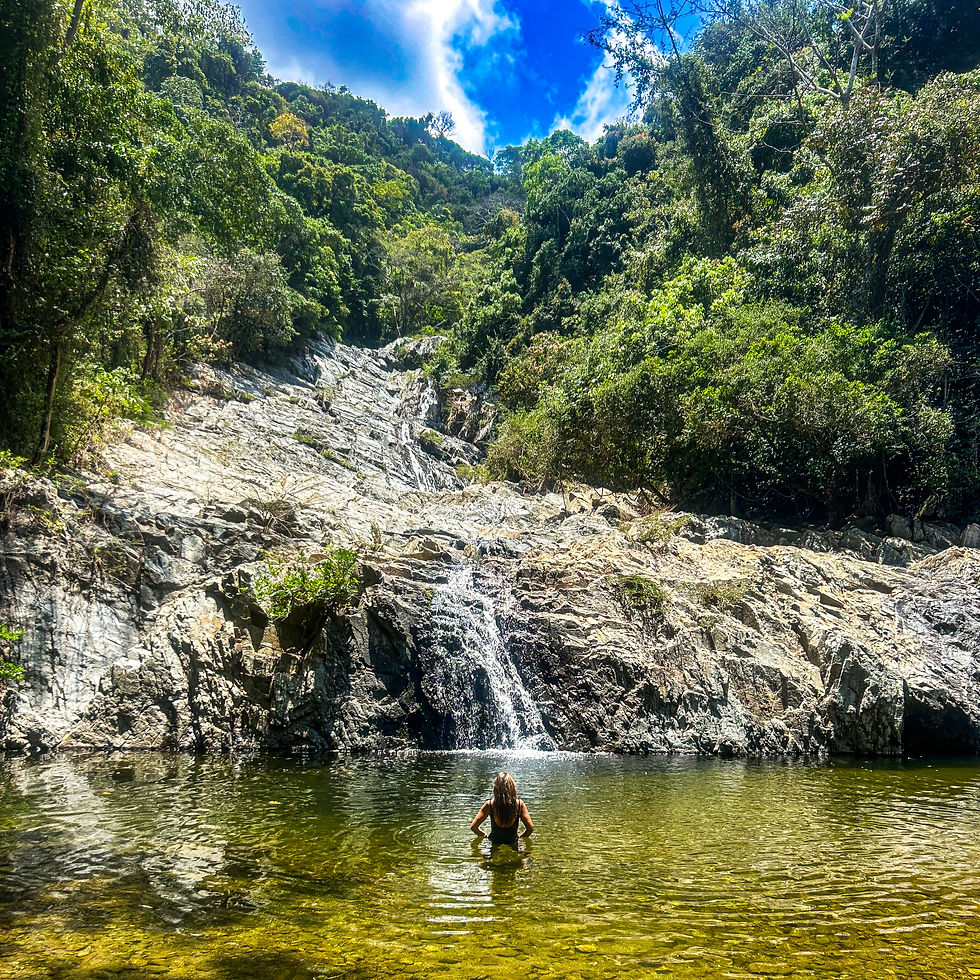
Nearby, you can visit Quebrada Valencia, a stunning multi-level waterfall hidden in the jungle. It’s easy to reach by bus or mototaxi and usually not crowded, a true hidden gem.
Palomino
After Mendihuaca, I headed to Palomino, the most famous beach town in the Santa Marta region. Palomino is also a surfer paradise, but it’s much busier and more crowded, which was a bit of a shock after the tranquility of Mendihuaca.

Palomino is also great for digital nomads: plenty of places to work from, yoga studios, and very easy to meet people, if you’re traveling solo and feeling social, Palomino is a great base for a longer stay.

I stayed at Casa Colibrí, which offered great value for money, a big breakfast, strong Wi-Fi, and lots of space to work. Unfortunately, it was close to a very noisy bar, and loud music on Saturday night made sleeping impossible.
Tip: always read reviews carefully and, if needed, contact the accommodation directly before booking, noise levels in Colombia can be intense.

Safety
I felt extremely safe in Minca, Mendihuaca, and Palomino, as well as on local buses to and from Santa Marta. Still, avoid traveling alone at night and book an Uber if your flight arrives late.
Extra tip
Santa Marta airport is located right in front of a small beach, I discovered it by chance and ended up watching one of the most beautiful sunsets of my trip just before my flight. If you can, book a flight right before sunset, you won’t regret it.

3.5 Rincon del Mar: one of the best hidden beach towns near Cartagena
Many travelers recommended Rincon del Mar to me, a small and very relaxed village near Cartagena, facing the San Bernardo Islands.
My first impression wasn’t great, I arrived during a public holiday without booking accommodation in advance, and everything was fully booked. Lesson learned: before arriving in a new country always inform yourself in advance about any potential public holiday, it could affect your trip.

Accommodation can be tricky here, especially if you’re on a budget. If you have a higher budget, Dos Aguas Lodge is a great option. For comfort without overspending, Cabaña Punta Coral is a good alternative. Dos Aguas is also a great place to work from, with reliable Wi-Fi, good food, and an amazing view.
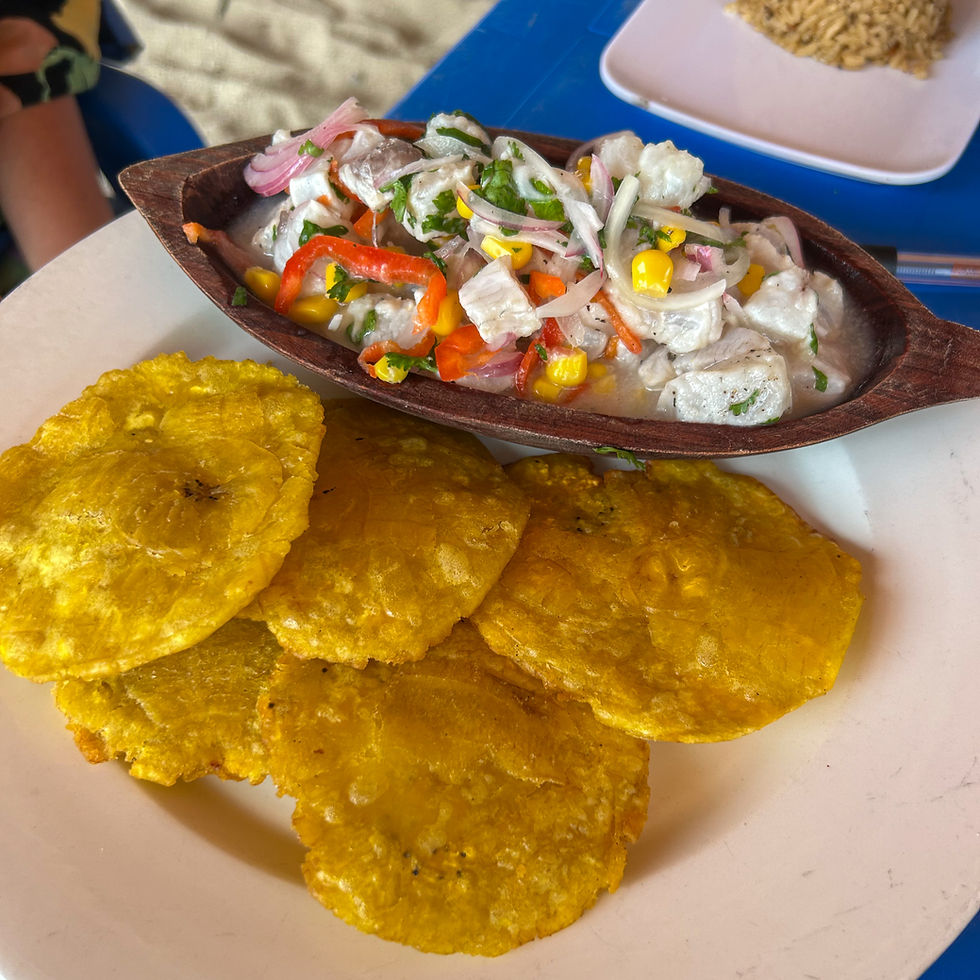
On the beach, you’ll find several local restaurants serving delicious and very affordable fish dishes. Locals are incredibly welcoming, and it doesn’t take long to feel at home.
From Rincon del Mar, you can:
Do a bioluminescent plankton tour in the evening.
Do an island hopping tour or spend a night on Isla Tintipán or Isla Múcura, both easily reachable and very relaxed.

Relaxing with a "tinto" on Isla Mucura
How to get to Rincon del Mar
From Medellín: night bus (around 12 hours) to San Onofre, then a 15-minute transfer.
From Cartagena: buses and minibuses run daily and take about 2 hours.
3.6 Salento: Colombia’s coffee region highlight
I almost skipped Salento to spend more time at the beach and I’m so glad I didn’t.
Salento, in the Eje Cafetero, is one of the most beautiful, safe, and welcoming places in Colombia. I flew from Cartagena to Pereira and then continued to Salento by bus.
I stayed at Nature Hostel Salento, where I had a huge private room for a very reasonable price. The location was safe and central, and the hosts were amazing. Salento is surrounded by lush green mountains, and from the main square you can easily get around using the iconic Willy jeeps, cheap, fun, and very practical.
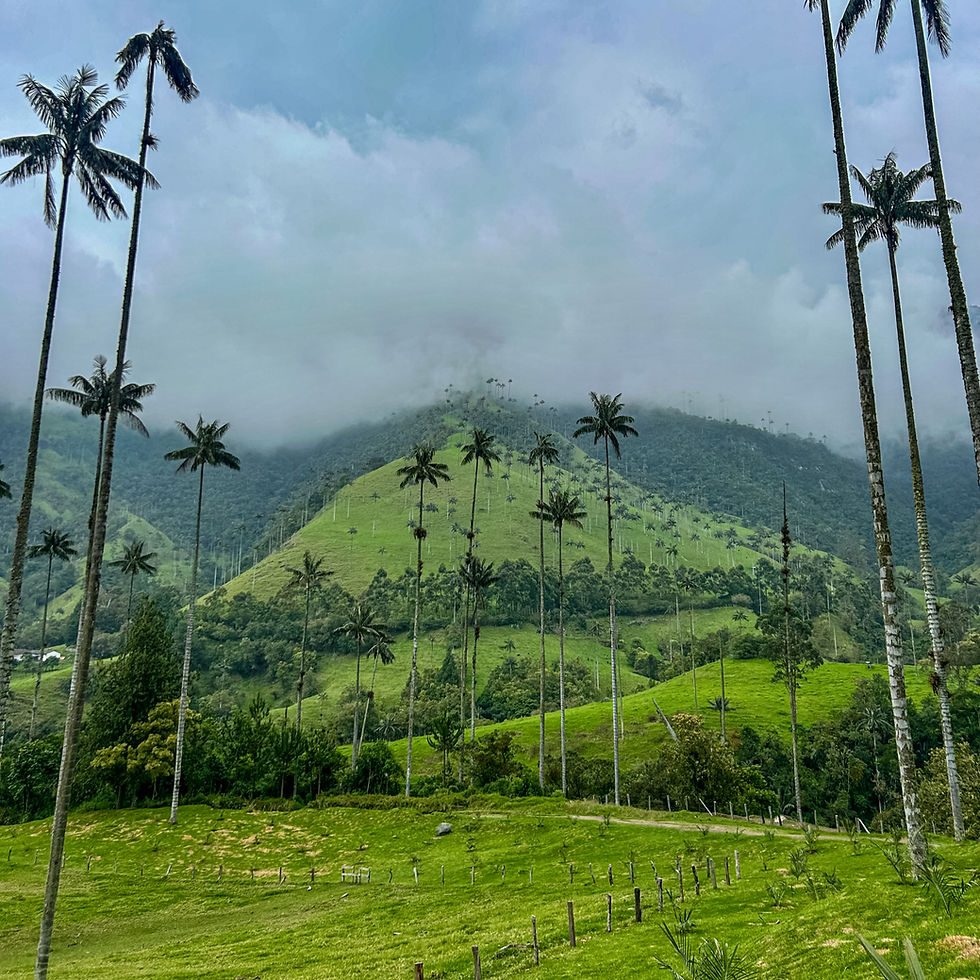
The main highlight is the Cocora Valley, famous for the world’s tallest wax palm trees. It’s incredibly easy to reach from Salento, and you can choose hikes ranging from a few hours to a full day, the views are absolutely unforgettable.

Another must-do is visiting a coffee farm: I went to Las Acacias, highly recommended by locals. The tour lasts about an hour and is both educational and scenic, you can walk there from town or take a Willy back. If you’re there around lunchtime, stop at El Rincón de Lucy Campestre on your way there, amazing food and stunning views over the valley.

Salento is the perfect base for exploring Colombia’s coffee region, especially if you love coffee, nature, and connecting with other travelers.
4. How to get around Colombia as a solo female traveler
Transportation in Colombia is much easier than many people expect:
Domestic flights are affordable and save a lot of time (Latam and Avianca are my favorites).
Buses are comfortable and reliable; overnight buses are fine if you’re prepared.
Uber, Didi, and InDriver are safer than street taxis in big cities.
In small towns, mototaxis and colectivos are common, just choose carefully.
Whenever possible, plan travel during daylight and book in advance.

5. Safest areas to stay in each destination
Medellín: El Poblado, Laureles
Cartagena: Getsemaní, Centro Histórico, Crespo
San Andrés: Spratt Bight
Santa Marta region: Minca, Mendihuaca, Palomino (main road area)
Rincon del Mar: Beachfront guesthouses
Salento: Anywhere near the town center

Village's views, Salento, Colombia
6. What I packed for 2 months in Colombia
Colombia has very different climates, so packing smart is essential.
Light clothes for the coast
Rain jacket and umbrella for Medellín
Warm jacket for Salento
Packing cubes
Quick-dry towel
Waterproof trekking shoes for Salento, Minca, and Medellín surroundings
7. Safety tips for first time solo female travelers in Colombia
Use Uber or trusted taxis
Avoid walking alone at night
Keep your bag closed and in front of you (especially on the Medellín metro)
Avoid expensive jewelry or luxury bags
Ask locals which areas to avoid
Join group tours instead of exploring completely alone
Keep a digital and physical copy of your passport
Always read accommodation reviews carefully before booking
Don't skip travel insurance, I also choose Safety Wing and I absolutely recommend it
Get an eSIM so you can connect when you land without depending on airport's Wi-Fi

8. Budget: how much I spent in 2 months
Colombia works well for different budgets:
Accommodation: 20–60€/night (60€ when I have been treating myself ahah)
Food: 3–15€ per meal
Domestic flights: €30–70
Tours: 15–30€
Daily budget: 30–60€ depending on the destination
Cartagena is generally more expensive; beach towns and the coffee region are more affordable.
9. How did I meet people during my trip in Colombia?
Colombia is one of the easiest countries in the world to meet people, travelers and locals alike. Speaking Spanish helps a lot when connecting with locals, but it’s also very easy to meet international travelers.

In Medellín, I joined WhatsApp groups like Nomads // Visitors of Medellín and Mujeres, where people constantly post events and meetups. Coworking spaces, cafés, colivings, walking tours, and hostels also make socializing effortless.
If your goal is to meet people and stay somewhere medium-term, Medellín is probably your best base, but I met solo travelers everywhere in Colombia.
10. FAQs
Is Colombia safe for solo female travelers?
Yes, it’s much safer than many people think if you choose safe areas and stay aware.
What’s the safest place for solo women?
Most places feel safe if you follow basic precautions and choose the right neighborhoods.
Is it safe to take buses?
Day buses are generally very safe, overnight buses are fine if you’re comfortable with them but make sure you have some accommodation book at your destination.
Is Colombia good for first-time solo travelers?
Yes, especially if you start in traveler-friendly places like Medellín or Salento.

11. Final thoughts
Colombia showed me how beautiful, warm, and transformative solo travel can be. If you’re thinking about traveling here alone, I hope this guide gives you the confidence and inspiration to go for it. Colombia is full of magic and incredible people, and it’s waiting for you to discover it!


Comments