Australia Working Holiday Visa Over 30: What Nobody Tells You Before You Go

Updated: Aug 27
1. A quick note on who this post is for
Before I get into it, I want to be upfront about where I'm writing this from, because context matters a lot with this topic: I didn't go to Australia on a working holiday visa as my first experience living abroad. I went after ten years of working for European startups, after years of living and working location-independently across multiple countries, and after building a career in a specific field. I was 34, I had savings, I had opinions about where I wanted to sleep, and I had a very clear sense of what I was and wasn't willing to compromise on.

Disclaimer: this post may contain affiliate links. If you make a booking through them, I may earn a commission at no extra cost to you.
Most people writing about the Australian WHV experience are either fresh out of university and leaving their home country for the first time, or professionals escaping expensive European cities looking for something different. Finding anyone with a background remotely similar to mine was almost impossible and that gap is exactly why I'm writing this.

If you're in your 30s, you've already lived a version of an independent life, and you're wondering whether the Australian working holiday visa is still worth it for someone like you, this one's for you.
2. Why I went (and how I almost didn't)
The Australian working holiday visa was always something I wanted to do. But in my twenties I was focused on studying and building my career, and by the time I came up for air it felt like the window had closed. I'd completely written it off.
Then one day, sitting in Sri Lanka, I met a girl who was about to move to Australia. I told her I'd always wanted to do that but it was too late for me. She looked at me and said: actually, depending on your passport, you can apply right up until the day you turn 35.
I went home and checked. She was right. For Italian passport holders, along with British, Canadian, French, Danish and Irish, the age limit is 35, not 30. I still had time.

A few months later I went through the first layoff of my career. And something clicked. I didn't want to open my laptop and pick up where I left off with another European company. I needed a real break, a reset that wasn't just a holiday but a genuine step back from everything I'd built. It took me a long time to make peace with the decision. It felt like a huge leap. But eventually I stopped overthinking and followed what my gut had been telling me for months. I applied. The visa was granted almost instantly. I sold everything, left my apartment in Spain, and got on a plane.
3. The age limit: what you actually need to know
This is the question I get asked most, so let me be clear: the standard age limit for the Australian Working Holiday Visa (subclass 417) is 18 to 30. But if you hold a passport from the UK, Ireland, Canada, France, Italy, or Denmark, you can apply up to and including the day before you turn 35.

You need to apply before your 35th birthday, but you don't need to arrive before it. So if you're reading this at 34 and wondering if you've left it too late, the answer is probably no. Check your eligibility on the Australian government's immigration website and don't assume the window is closed before you've looked.
4. What I expected vs. what I found
I did a lot of research before going. I read everything I could find: forums, blogs, Reddit threads. Like everything on the internet, the opinions ranged from "best experience of my life" to "don't bother." I tried to take it all in without letting other people's stories dictate my own expectations, knowing that everyone's experience is shaped by who they are, what they want, and where they're starting from.

I'd decided I didn't want to travel around constantly. I wanted to be somewhere, build a routine, make real connections. So I chose Sydney, a city that had always called to me, big enough to have everything I needed, and with the most amazing beaches close by.
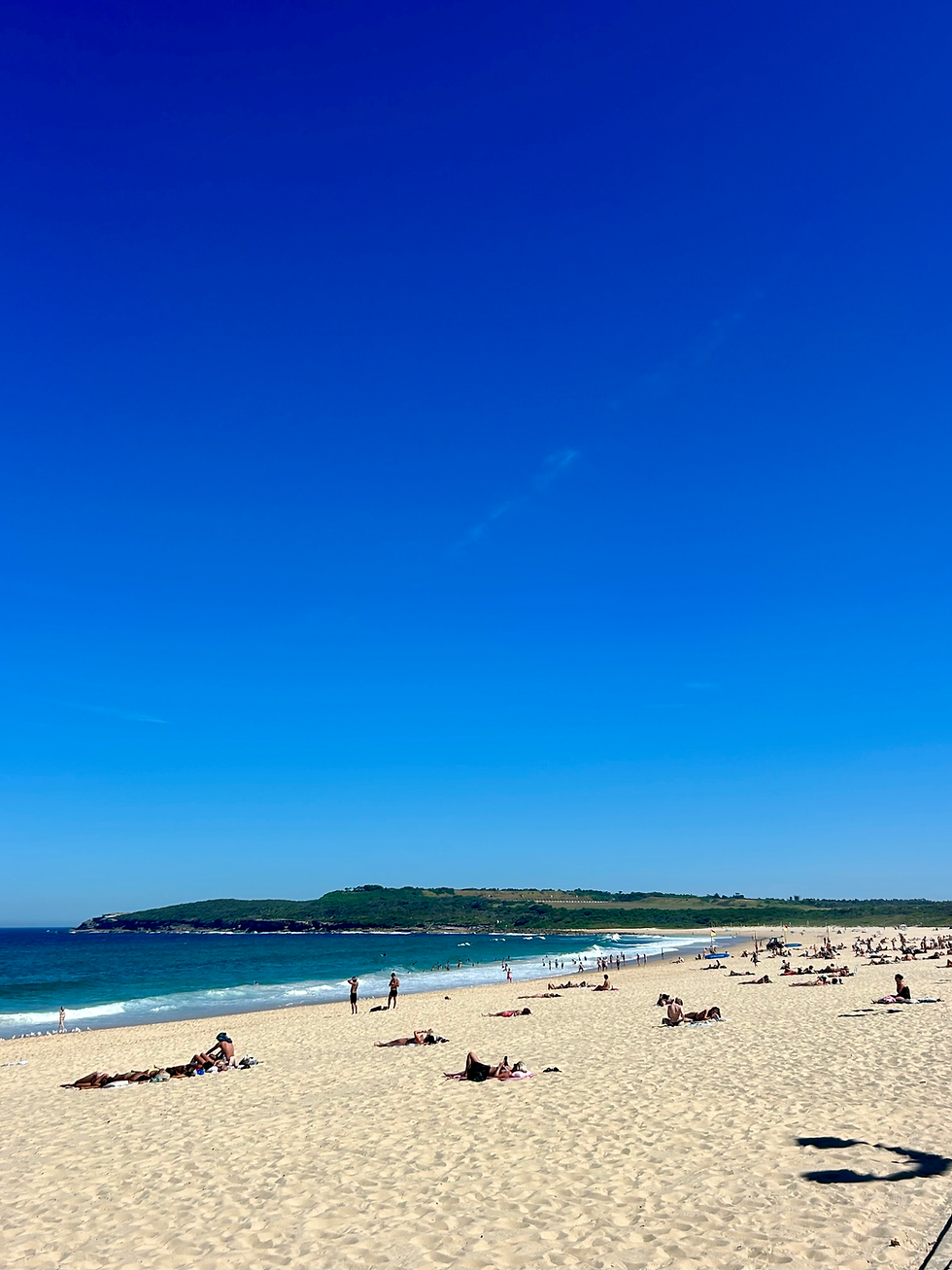
Two hours after landing I'd found a room. The day after I said yes to my first job offer. For someone who'd convinced herself she was too overqualified and too old for anything available on a WHV, that was genuinely surprising.
5. Finding work in Australia on a Working Holiday Visa Over 30: what's changed and what people don't tell you
Getting a job in retail was fast and easy for me. But I watched a lot of people around me struggle, and I want to be honest about the full picture.
The job market in Australia is not what it was five or ten years ago, when the WHV had a reputation for being a golden ticket to easy employment. Finding work is absolutely possible, but don't assume you'll walk into the same type of role you had at home. Unless you're in a field with a genuine shortage of local candidates, most permanent office positions published on Seek or Indeed will not be realistically accessible to someone on a working holiday visa.

There's also something important to understand about the nature of the work itself. The WHV limits you to a maximum of six months with the same employer in most fields. Which means most jobs you'll find are either fixed-term contracts (if you're lucky, like I was) or casual positions, which pay more per hour but give you zero stability. Casual means they call you when they need you. And just as easily, they can stop calling. I saw this happen to people around me constantly, employed one week, with nothing lined up the next.

The money can be good. Australia's minimum wage is strong, and coming from a country like Italy where minimum wage protections don't exist, the hourly rate can feel significant. But run the numbers carefully before you assume you'll be saving. Which brings me to the next point.
6. The cost of living reality
Sydney is expensive. Not "expensive for a travel destination" expensive, genuinely, structurally, eye-wateringly expensive for everyday life.
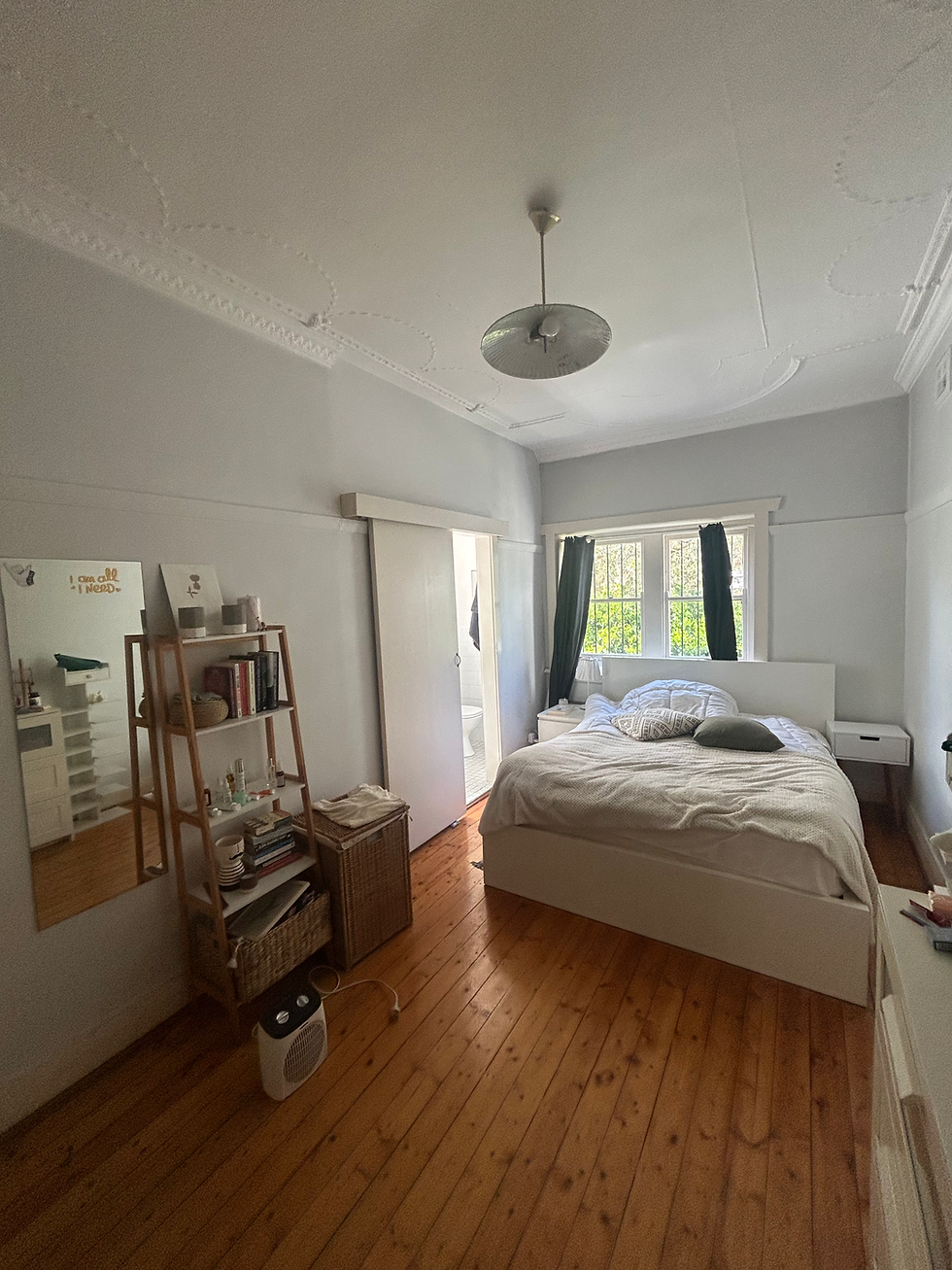
I was paying $500 a week for a room with a private bathroom in Queens Park, one of the nicer areas near Bondi Junction. In a shared house with three other people. That is not unusual for Sydney, it's pretty standard, but it was a number I had to sit with for a moment, especially coming from a life in Spain, where I'd had my own amazing sea-view apartment, for which I was paying way less.

Whether the Australian salary-to-cost-of-living equation works in your favour depends entirely on your situation: what industry you're in, what your lifestyle looks like, where you're comparing it to, and, most importantly, your housing situation. For some people it works beautifully. For others, especially those used to a certain level of comfort and independence, the maths simply doesn't add up the way they hoped.
Go in with a clear budget, a lot of savings and realistic expectations. Don't assume high wages automatically mean savings.
7. Finding your people: the part nobody really prepares you for
This was, unexpectedly, one of the hardest parts for me. Sydney is a sociable city on the surface, but I found spontaneous connection genuinely difficult. Striking up a conversation at the gym or on public transport? Almost never happened. Making friends required real, intentional effort, networking events (especially on Meetup), apps like Time Left (which organises dinners with strangers and was a genuine lifeline for me), and a willingness to keep showing up even when it felt awkward.

The other thing I didn't fully anticipate: most people I met were either in their early twenties on their first time living abroad, or local professionals living a fairly traditional Sydney life. I barely met anyone with a background like mine, someone who had already been living and working internationally, who understood the nomad lifestyle, who wasn't either
overwhelmed by or completely uninterested in the experience of living in a new country.
I did make real friends. I was lucky. But if you're used to falling into community easily, as tends to happen in co-working spaces in Southeast Asia or digital nomad hubs, Australia may feel more isolated than you expect, especially at first.
8. Why I left Sydney (and then Australia)
After a few months, I made peace with something I'd been resisting: Sydney wasn't the place for the life I wanted to build, at least not long term.

The reasons stacked up gradually rather than all at once:
Distance: Australia is extraordinarily far from everything else. For a traveler like me who's used to jumping between countries, the isolation is real. Flying anywhere interesting costs a lot of time and money.
Cost: Living comfortably in Sydney on a WHV budget requires constant compromise. Traveling around Australia while you're there is also expensive, especially if you're not a hostel or camping person.
Community: If you work online or come from a nomadic background, the digital nomad infrastructure that exists in cities like Chiang Mai, Lisbon, or Da Nang simply doesn't exist in the same way in Sydney.
Culture: I say this gently, but I'm European and I need beautiful cities, history, architecture, and a certain pace of life around me. Nature and beaches in Australia are genuinely stunning. But long term, that wasn't enough for me.
Weather: Nobody told me Sydney summers could be this grey. I arrived expecting endless sunshine and got a lot of overcast skies, rain, and temperatures that dropped 20 degrees without warning. I didn't get anywhere near as many beach days as I'd imagined.

I made a couple of trips: Melbourne for the Australian Open, Tasmania, and then a final month and a half in Byron Bay, which was a completely different energy and exactly what I needed to close the chapter properly. And then I was ready. I'd learned what I came to learn and booked a one way ticket to Vietnam.
9. What Australia IS perfect for even if it wasn't for me
I want to be clear: my experience is my experience. And Australia genuinely is the right place for a lot of people doing the WHV in their 30s.

If any of these sound like you, go:
You are made for van life: the community is huge, the infrastructure supports it, and you can find a great second-hand van on Facebook Marketplace for a reasonable price and resell it easily when you leave.
You're coming from a country with low wages and want to save money while living well
You want to slow down in one place and build a local life, even temporarily.
You're a morning person, or want to become one: the energy in Australia is undeniably oriented around starting the day early. People are already at the beach, in the park, or finishing a workout before most of Europe has had its first coffee. Even as someone who has never been a natural early riser, I found myself waking up earlier without forcing it. If you've always wanted to shift your rhythm, Australia makes it surprisingly easy.
You love sport and staying active: the culture around movement and outdoor sport is infectious in a way I didn't expect. Between the coastal walks, the surf culture, and the sheer number of studios and fitness options everywhere you look, staying active almost happens by default. It's also where I discovered Reformer Pilates, something I became completely obsessed with and have kept up ever since. If fitness and an active lifestyle matter to you, Australia will absolutely feed that.
You love outdoor: the nature, the national parks, the hiking, the coast, and that's genuinely enough for you.
You want to reset your career in a structured way, with the safety net of strong employment protections.

10. The real takeaway
Going to Australia on a working holiday visa in your 30s can be one of the best decisions you make. But the version of it that works for you depends almost entirely on going in with clear, honest expectations about what you're actually looking for, not the version you've constructed from Instagram or from other people's stories.

For me, it gave me something more valuable than I expected: clarity. I came back to myself. I understood what kind of life I actually wanted, not the one I thought I should want. And that alone was worth every complicated, expensive, grey-sky-Sydney moment of it.
If you're sitting on the fence, my advice is simple: stop waiting for someone else's experience to tell you what yours will be. Apply. Go. Find out for yourself.
Have questions about the Australian working holiday visa over 30? Drop them in the comments, I'm happy to share more.
And if you're thinking about what comes after Australia, you might enjoy reading about why I chose Da Nang as my next base — coming soon.


Comments